Jellyfish in Spain 2026: Types, Dangers and Warnings on the Costa del Sol
Spain's coastline is one of Europe's most popular destinations for beach lovers. But alongside sun, sea and sand, bathers sometimes encounter jellyfish. Rising sea temperatures, overfishing and climate change have caused jellyfish numbers to increase, particularly in the Mediterranean and the Costa del Sol. Visitors often ask: are jellyfish in Spain dangerous? The answer depends on the species. Some are harmless, while others can cause painful stings or, in rare cases, serious medical emergencies.
This updated guide explains the types of jellyfish in Spain, which are common in regions like Mallorca, Alicante and Málaga, and which dangerous jellyfish you should be aware of, besides other venomous creatures in Spain you should also know about. It also includes practical advice on treatment, warnings issued for the Costa del Sol, and what to do if you're stung.
Why are there more jellyfish in Spanish waters?
Several factors have contributed to rising jellyfish numbers along Spanish beaches: warmer seas mean jellyfish can reproduce more quickly and move closer to shore; the decline of predators, as overfishing has reduced species like tuna and turtles that naturally control jellyfish; and reduced river flow, as drought has lowered freshwater input, creating saltier and warmer coastal waters where jellyfish thrive.
This explains why in recent years jellyfish warnings on the Costa del Sol have been more frequent, with some beaches flying purple flags to alert bathers.
Most common types of jellyfish in Spain
Cotylorhiza tuberculata – The Fried Egg Jellyfish
Perhaps the most recognisable Spanish jellyfish, the fried egg jellyfish looks exactly like its name suggests. Found mainly in the Mediterranean and the Mar Menor, it has a yellow dome with white edges. At 25–30 cm in diameter, it is harmless to swimmers, causing only mild irritation if touched. In Alicante and Murcia, tourists often encounter this species during summer.
Pelagia noctiluca – The Luminous Jellyfish
Locally known on the Costa del Sol as the "malagueta", this pink-purple jellyfish glows faintly in the dark and is one of the most frequent causes of stings in Andalusia. It has 16 tentacles and a diameter of about 20 cm. Its sting is painful, leaving red marks, itching and sometimes open wounds. In sensitive individuals, it can cause respiratory or cardiovascular issues. This is one of the most dangerous jellyfish in Spain despite not usually being life-threatening.
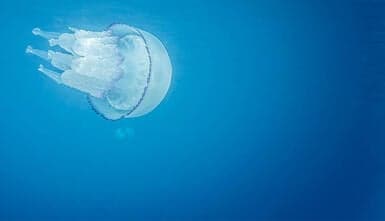
Rhizostoma pulmo – The Barrel Jellyfish
Known as the dustbin-lid jellyfish for its enormous size (up to 100 cm diameter), it is common in the Mediterranean and Atlantic. Usually white with blue edges, its sting is mild, but its size can alarm swimmers. You'll often see it washed ashore in Cádiz or Valencia.
Aurelia aurita – The Moon Jellyfish
The classic clear jellyfish most people imagine. It is common in the Mar Menor and Mediterranean lagoons. Stings are usually harmless, producing only mild irritation. It is not considered a threat to bathers.
Chrysaora hysoscella – The Compass Jellyfish
Easily recognisable thanks to its brown radial markings resembling a compass. It has up to 24 long tentacles and can reach 30 cm diameter. Its sting is painful, leaving target-shaped rashes that may swell or, in rare cases, become infected. Found in Atlantic and Mediterranean waters.
Physalia physalis – The Portuguese Man o' War
Although not a true jellyfish, the Portuguese man o' war is one of the most dangerous stinging creatures Spanish bathers might encounter. Its blue-purple float drifts on the surface, while tentacles can reach 30 metres in length. Its sting is excruciating, potentially causing respiratory problems, heart issues or shock. It is more frequent in the Atlantic (Canary Islands, Galicia) but has also been sighted in the Mediterranean, including the Costa del Sol.
Carybdea marsupialis – The European Box Jellyfish
Also called the sea wasp, this small (5–6 cm) transparent jellyfish is found along Mediterranean coasts. Rare but dangerous, it has four tentacles that can extend ten times its body length. Its sting causes severe pain and in some cases requires urgent medical attention.
Mnemiopsis leidyi – The Sea Walnut
A comb jelly introduced from the western Atlantic. It is transparent, oval, and lacks tentacles. Fortunately, it is harmless to humans but can affect marine ecosystems by consuming plankton and fish larvae.
Jellyfish on the Costa del Sol
The jellyfish situation on the Costa del Sol changes year by year. During hot summers, purple flags may be raised in Málaga, Marbella or Nerja when swarms are detected. The most common species here are the Pelagia noctiluca and fried egg jellyfish, but occasionally box jellyfish and Portuguese man o' war are reported. Local councils now provide apps and beach information boards with jellyfish warnings, so check before swimming.
What to do if stung by a jellyfish
Leave the water calmly to avoid further stings. Rinse with seawater (never fresh water, which worsens venom release). Remove tentacle remains with tweezers or a card, not with bare hands. Apply cold packs to reduce pain and swelling. Seek medical help if symptoms worsen, especially with Portuguese man o' war or box jellyfish stings.
Most stings cause only discomfort, but being able to identify the types of jellyfish in Spain helps doctors treat reactions more effectively.
Are jellyfish in Spain dangerous?
Many tourists ask: are there jellyfish in Spain? Yes, and while most are harmless, some Spanish jellyfish species can be painful or dangerous. On the Costa del Sol, the main risk is from luminous jellyfish (Pelagia noctiluca), while in the Atlantic the Portuguese man o' war is the most feared. Staying informed with local jellyfish warnings, especially in Mallorca and southern Spain, is the best way to enjoy the sea safely.
Conclusion
Jellyfish are a natural part of Spain's marine ecosystem. From the harmless fried egg jellyfish to dangerous species like the box jellyfish and Portuguese man o' war, bathers should stay aware but not alarmed. Check local notices, follow lifeguard advice, and remember that most stings are minor. With this knowledge, you can enjoy Spain's beaches — including the Costa del Sol, Mallorca, Valencia and beyond — with confidence and safety.
Planning a move to Spain? Imagine living near the Mediterranean, with quick access to the sea (and occasional jellyfish spotting!). Contact our local property experts today to find your dream home on the coast.
Have questions about property on the Costa del Sol? We're happy to help.
Get in Touch