Solar panels in a vacation rental property: profitability on the Costa del Sol
Managing a vacation property under the intense sun of the Costa del Sol is a constant challenge to maintain energy efficiency and guest comfort, especially with heavy use of air conditioning systems during the hottest months of the year. This recurring expense directly impacts the owner's profits, raising the question of how to stabilize these costs without compromising the quality of the service provided.
Various analyses of the real estate sector and of photovoltaic self-consumption in Andalusia suggest that integrating solar technology is an option increasingly considered by investors looking to improve the financial performance of their properties. The success of such projects fundamentally depends on a precise assessment of technical and legal feasibility before making any disbursement, factors that will determine whether the installation will be a real competitive advantage or an administrative burden.
To decide whether it is worthwhile to install solar panels in a vacation rental property, it is necessary to analyze the consumption profile, the current tax incentives, and the legal particularities of each autonomous community. This process will allow determining whether the investment effectively translates into greater long-term profitability.
Legal and regulatory requirements prior to installation
Any project of this type requires verifying ownership of the building's roof. When the dwelling is part of a community of owners, the Horizontal Property Law establishes that any intervention on common elements requires an agreement in the owners' meeting. It is essential to obtain official approval, since, although the resulting energy benefits a single user, the installation occupies shared space.
At the municipal and regional levels, it is mandatory to submit the necessary technical documentation to the Town Hall to process the building permit. Once the installation is completed, Andalusian regulations require formalizing the self-consumption registration to legalize the supply point, always complying with the technical safety standards set by the local electricity distributor.
Efficient sizing for seasonal use
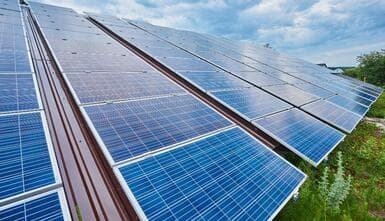
The calculation of the required power must be strictly adjusted to the operational reality of the property, avoiding oversizing. In Costa del Sol properties, the consumption profile is usually high during the central hours due to air conditioning and pool filtration systems, which optimizes the performance of the photovoltaic system.
The ideal south-facing orientation ensures maximum solar capture, significantly reducing payback times. Before purchasing equipment, it is necessary to carry out a detailed technical study that considers possible shading projected by neighboring buildings or vegetation, thus ensuring that energy production remains constant throughout the summer season.
Costs, subsidies and economic profitability
The initial outlay per kWp installed in this region usually ranges between 1,200 and 1,500 euros, depending on technical complexity and the quality of the selected components. To reduce the financial impact, owners have various public aids that must be managed in advance, with the Ecovivienda Plan being one of the main avenues to obtain partial recovery of the investment cost.
The combination of deductions in personal income tax (IRPF) and municipal discounts on property tax (IBI) or construction tax (ICIO) can reduce the investment recovery period to between 4 and 6 years. The main sources of savings are: the Ecovivienda Plan, a subsidy of up to 40% of the total cost; an IBI discount, an annual tax reduction depending on the municipality; and surplus compensation, direct savings on the bill through the sale of surplus energy.
Impact on the management and profitability of the vacation rental
Including a solar installation improves the property's public image, positioning it as a sustainable and responsible asset for a guest profile increasingly concerned about the environment. This distinction facilitates attracting international clients who value energy efficiency, potentially allowing rental rates to be adjusted due to the added value provided by the use of clean energy.
From an operational perspective, maintenance is minimal if constant monitoring of production is carried out through digital applications. Periodic cleaning of the panels, especially after episodes of haze (calima), ensures that energy efficiency does not decline, thereby protecting the equipment's service life of more than two decades.
Common mistakes when installing solar panels in a vacation rental property
The most frequent mistake is oversizing the installed capacity without analyzing actual consumption during low-occupancy months. Investing in excessive capacity unnecessarily raises the purchase cost, generating surpluses that, although compensated, do not maximize the return if the system is disproportionate to the property's real demand.
Another inadvisable practice is ignoring the condition of the roof or not checking inverter warranties before execution. It is vital to have a technical team that offers a comprehensive service, from permit management to commissioning, thus avoiding delays in obtaining tax deductions and problems arising from a deficient initial installation.
Have questions about property on the Costa del Sol? We're happy to help.
Get in Touch