
Following the Sun: The Hottest Places in Spain
Spain is one of Europe's sunniest countries, with more than 3,000 hours of sunshine every year. That makes it one of the top destinations for people searching for the hottest place in Spain or wondering what is the hottest part of Spain all year round. While much of the country is warm, certain regions break records for extreme heat in summer, and others remain pleasantly mild in winter. If you want to know the warmest part of Spain in December or the hottest city in Spain in August, this guide explains it all, with data and record temperatures.
The hottest cities in Spain during summer
Most of Spain heats up in July and August, but some places get hotter than anywhere else in Europe. In 2025, official alerts reported temperatures of up to 45 °C in the valleys of the Guadalquivir, Guadiana and Segura, and in regions like the Ebro and Duero basins. These are the hottest parts of Spain in summer and where heat records are most often broken.
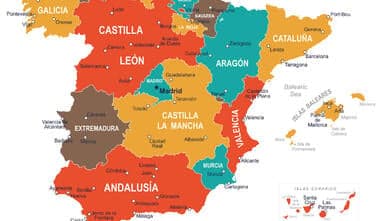
Seville, in Andalusia, is widely regarded as the hottest city in Spain. Average August temperatures are around 35.5 °C, but often rise above 40 °C. It has an official maximum of 47 °C and a disputed record of 50 °C in the 19th century. Córdoba, also in Andalusia, is another contender for the hottest place in Spain today; in Montoro, Córdoba, a record 47.3 °C was measured in July 2017, and average highs in August are 36.5 °C. Murcia, in southeast Spain, is known for its gardens and dry summers, with average August highs of 34 °C and records of up to 46 °C, though evenings are slightly cooler at around 22 °C. Madrid, in central Spain, is an inland city with hot, dry summers, and average highs in July and August reach 33 °C, making it one of the hottest parts of Spain in August. Granada, in Andalusia, has high summer averages of 34 °C, though evenings can be cooler due to altitude. Badajoz, in Extremadura, sees average August highs of 34.5 °C, with historical records up to 47 °C. Almería, in Andalusia, is a desert-like city, with summers often above 40 °C, and is one of the driest and sunniest places in Europe.
The warmest parts of Spain in winter
Spain is not only about extreme summer heat. Many travellers search for the warmest place in Spain in winter or the warmest part of Spain in December. The Canary Islands, where Gran Canaria averages 22 °C in winter with sunshine most days, are the warmest region of Spain in January and February. Málaga, in Andalusia, sees summer highs exceed 30 °C, but in winter it is mild with averages of 17 °C in December, making it one of the warmest cities in Spain all year round. Seville has December averages of around 15 °C, ideal for a mild winter break, and Valencia, another eastern city, also averages 15 °C in December. Mallorca, in the Balearics, has December averages of 14 °C and offers sunny days for outdoor activities.
Record-breaking temperatures
Spain has some of the highest recorded temperatures in Europe. The most extreme include 47.3 °C in Montoro, Córdoba, in July 2017, the hottest place in Spain ever officially recorded; 47.1 °C in Mengíbar, Jaén, in August 2011; 47 °C in Badajoz in 1864 and 1964; and 47 °C in Seville in 1946. There are unofficial claims of 50 °C in Seville in the 19th century, but these are not recognised. Still, Andalusia remains the hottest part of Spain and one of the hottest areas in Europe.
Why does Spain get so hot?
Several factors explain the country's heat. Geography plays a role, as valleys such as the Guadalquivir trap heat and have little air circulation. The Mediterranean climate brings hot, dry summers caused by persistent high-pressure systems. And climate change means increasingly frequent and intense heatwaves, so the hottest places in Spain now are even hotter than in past decades.
Tips for coping with the Spanish heat
Whether you are in the hottest part of Spain in October or experiencing summer highs in August, there are simple ways to stay safe: avoid going outside between 2 pm and 6 pm, drink water regularly to stay hydrated, use air conditioning or take advantage of shopping centres and public spaces to cool off, wear light clothing, sunglasses and hats, check official weather forecasts for heat alerts, and adopt local culture by resting indoors during siesta hours when the heat is strongest.
Conclusion
Where is the hottest place in Spain? In summer, cities like Seville, Córdoba and Murcia lead the list, with temperatures above 40 °C. Madrid, Badajoz and Almería also experience extreme heat. In winter, the Canary Islands and cities like Málaga remain the warmest parts of Spain. Whether you are searching for the hottest place in Spain today, the warmest place in Spain in December, or the hottest city in Spain in August, this country has an option for every season.
Want to enjoy sunshine all year long? Our team can help you find the perfect home in Spain's hottest regions. Get in touch with us today and start living in the sun.
Have questions about property on the Costa del Sol? We're happy to help.
Get in Touch