
The Venomous Creatures in Spain You Need to Know About
Spain is famous for its beaches, sunny weather and rich culture, not for deadly wildlife. However, it is home to a surprising number of venomous and dangerous animals. Most are not life-threatening, but some can cause painful stings or bites, and in rare cases serious illness. Knowing which dangerous animals in Spain exist, where they live and how to avoid them will help you stay safe while enjoying the outdoors.
Spiders in Spain
The recluse spider (Loxosceles rufescens) is present in parts of Spain, particularly Andalusia. It is brown, with a violin-shaped marking on its back, and hides in dark corners. Although bites are rare, they can cause painful sores and necrosis. In 2021, a British tourist in Ibiza lost two fingers after a recluse bite. If bitten, seek medical treatment immediately.
The black widow spider (Latrodectus tredecimguttatus), also known as the Mediterranean black widow, is found in Almería, Aragón, Andalusia and Valencia. It is shiny black with a red hourglass on its body. Its venom is less powerful than its American cousin, but it can still cause fever, muscle pain, breathing difficulty and vomiting. Prompt medical attention is recommended if bitten.
Scorpions in Spain
Scorpions are often overlooked, but several species live in southern and eastern Spain. The most notable include Buthus occitanus, the European yellow scorpion, widespread in dry, rocky habitats; Buthus ibericus and Buthus gonzalezdelavegai, found in Andalusia, Murcia and Valencia; and Euscorpius flavicaudis and Euscorpius italicus, smaller scorpions found across Catalonia and other regions.
They measure 3–7 cm. Their stings cause pain and swelling, but are rarely life-threatening. To avoid them, don't lift stones with bare hands, shake shoes and towels before use, and be careful when camping in rocky areas.
Snakes in Spain
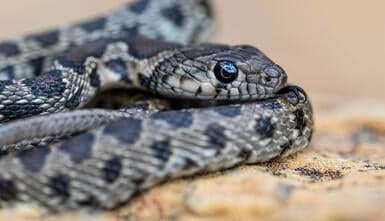
Snakes are the most searched-for dangerous animals in Spain. There are five venomous species to be aware of, though fatalities are extremely rare. The asp viper (Vipera aspis), found in northern and eastern Spain, is brown with a triangular head and dark stripes; its venom can cause serious symptoms and medical treatment is essential. Seoane's viper (Vipera seoanei) is grey or black with zig-zag patterns, present in Galicia, Castilla y León, Cantabria and the Basque Country, and can be dangerous for vulnerable people if untreated. Lataste's viper (Vipera latastei) is grey with zig-zag down its back and a snub nose, and is widespread in rocky, arid regions. The false smooth snake (Macroprotodon cucullatus) is small, grey with brown spots, with mild venom and very rare bites. The Montpellier snake (Malpolon monspessulanus) is long, bluish-green, with a white underbelly; its venom is mild but a bite can be painful, though it usually avoids humans.
Jellyfish and marine hazards
The Mediterranean and Atlantic waters of Spain host several stinging species. The purple stinger (Pelagia noctiluca) is small, purple, with long tentacles; it is very common and its sting is painful but not deadly. The flower hat jellyfish is rare, transparent with coloured tentacles, and its sting causes skin burns and rashes. The sea wasp jellyfish is infrequent in Spain, with a painful sting that is not considered fatal. The Portuguese man o' war (Physalia physalis) is not a jellyfish but a siphonophore, with an extremely painful sting and tentacles up to 30 ft long; contact can be life-threatening, so it should be avoided even if found washed ashore.
Always pay attention to purple flags on beaches, which warn of jellyfish. If stung, rinse with seawater, not fresh water, and seek medical help if symptoms are severe.
Caterpillars and centipedes
The pine processionary caterpillar (Thaumetopoea pityocampa) is common in pine forests. Its hairs can cause severe allergic reactions, rashes and even temporary blindness. Do not touch or disturb their silk nests.
The Megarian banded centipede (Scolopendra cingulata) is black and yellow, up to 15 cm long. Its bite is very painful but not fatal. These centipedes are more active in summer and hide under rocks and wood.
Ticks and mosquitoes
Ticks and mosquitoes are not venomous, but they spread diseases. In 2020, Andalusia saw an outbreak of West Nile virus transmitted by mosquitoes. Tick bites in rural Spain can spread Lyme disease or other infections. Always use repellents, cover arms and legs in wooded areas, and check your skin after hikes.
Other dangerous animals in Spain
The Iberian lynx is one of the rarest cats in the world, found in Andalusia. It is not a threat unless cornered, but is worth mentioning as a powerful predator. Wild boar (Sus scrofa) are increasingly common even near urban areas; they are normally shy, but can be dangerous if protecting young, and their tusks can cause serious injuries. Back away slowly if encountered, and never feed them.
How to stay safe from venomous and dangerous animals
Wear sturdy boots when hiking and avoid moving rocks with bare hands. Shake out shoes, clothes and towels before use outdoors. Be cautious in forests, rocky areas and pine zones where vipers, scorpions and caterpillars live. Check beach flags before swimming, since purple flags warn of jellyfish. Use insect repellent and cover skin in areas with ticks or mosquitoes. Give wild animals space, and do not approach lynx, boar or any large animal.
Conclusion
Are there dangerous animals in Spain? Yes, but most are rarely encountered and serious incidents are uncommon. From venomous snakes and spiders to jellyfish, scorpions and insects, awareness and caution are your best protection. With sensible precautions, you can enjoy Spain's nature, beaches and mountains safely.
Are you thinking of moving to Spain? Whether you want a holiday home or a permanent base, our team of local experts can help. Get in touch today and start your journey toward living in Spain with peace of mind.
Have questions about property on the Costa del Sol? We're happy to help.
Get in Touch