Barbecue Rules and Fire Restrictions in Spain: What's Actually Allowed
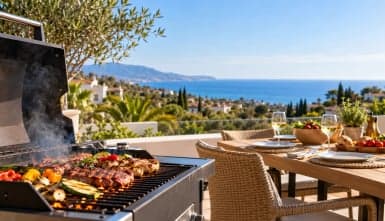
A villa with a private garden, a spacious terrace overlooking the Mediterranean and long, warm evenings from spring through autumn – outdoor living is one of the great attractions of owning a property on the Costa del Sol. And for many homeowners, that includes enjoying a barbecue with family and friends.
However, barbecue rules in Spain are not always as straightforward as they might seem. In Andalusia, strict wildfire prevention laws restrict the use of open flames in certain locations, particularly during the summer months. Even where regional restrictions do not apply, local council regulations and community rules may determine whether you can use a barbecue on your terrace or in your garden.
For property owners and buyers in Mijas, Marbella, Estepona, Benahavís and the surrounding areas, understanding these restrictions can help avoid fines, disputes with neighbours and potentially serious fire-related consequences.
Andalusia's Fire Prevention Laws: When Are Barbecues Prohibited?
Andalusia experiences hot, dry summers, and its forests and natural landscapes are particularly vulnerable to wildfires. To reduce the risk, the regional government, the Junta de Andalucía, enforces strict fire-prevention regulations.
Under Andalusia's wildfire prevention legislation, including Ley 5/1999 and the Order of 21 May 2009, the main high-risk fire season runs from 1 June to 15 October each year. During this period, the use of fire for barbecues and other purposes is generally prohibited in forest areas (terrenos forestales), in land situated within 400 metres of forest areas, known as zonas de influencia forestal, and in recreational and picnic areas located within these restricted zones, even where permanent barbecue facilities have been installed there.
The 400-metre restriction is particularly important for homeowners on the Costa del Sol. Many residential developments in Mijas, Marbella, Benahavís and Estepona are surrounded by pine forests, hillsides or natural vegetation. Even if a property is located in an established urbanisation with paved roads and neighbouring houses, it may still fall within the legally defined forest influence zone. This means that owning a private garden does not automatically give you permission to use a charcoal or wood barbecue during the summer.
The standard seasonal prohibition is permanent and applies annually without needing a new announcement. Additional emergency restrictions may also be introduced when fire conditions become particularly dangerous.
Charcoal, Gas or Electric: Which Barbecues Are Allowed?
Not all barbecues present the same level of fire risk, but choosing a different type of grill does not automatically remove every legal restriction.
Traditional charcoal and wood-fired barbecues create open flames, hot embers and potentially dangerous sparks. In forest areas and their 400-metre influence zones, these barbecues are generally prohibited from 1 June to 15 October, unless a specific legal exception and the required authorisation apply. Outside the high-risk season, the rules are less restrictive, but using fire in forest areas and their influence zones remains regulated. In general, cooking with fire is permitted only in locations expressly equipped for that purpose, subject to applicable conditions.
Gas barbecues are popular because they are convenient, easy to control and do not produce the flying embers associated with charcoal. However, gas grills still use an open flame and should not be assumed to be exempt from wildfire restrictions. In fact, Andalusian regulations provide a specific exceptional-authorisation procedure for certain gas cooking appliances and barbecues at authorised tourist accommodation and rural restaurants during the high-risk season. For private homes, owners should check the applicable regional and municipal rules before using a gas barbecue, especially when the property is close to forest or scrubland.
Electric barbecues and electric plancha grills are generally the most practical alternative for homeowners who want to cook outdoors during the summer. Because they do not produce open flames or burning embers, they significantly reduce the risk of sparks starting a wildfire. Nevertheless, electric grills are not automatically exempt from every restriction: local safety regulations, building rules and community bylaws may still apply, particularly on apartment balconies and covered terraces. For many apartment owners, an electric grill is the simplest and least troublesome option, provided its use is permitted by the building's rules.
Can You Have a Barbecue on an Apartment Terrace?
For owners of apartments and penthouses on the Costa del Sol, there is another important consideration: the community of owners, or comunidad de propietarios. Many residential communities have their own rules governing barbecues on balconies, terraces and in shared areas. Some communities prohibit charcoal barbecues entirely, while others impose restrictions designed to prevent smoke, unpleasant smells or fire hazards.
These restrictions may appear in the community statutes (estatutos) or internal regulations (normas de régimen interno). Their legal enforceability depends on the nature of the restriction and how it was adopted. Even where there is no express barbecue prohibition, activities that cause serious nuisance, danger or damage may give rise to complaints under Spanish property law. For example, smoke regularly entering a neighbouring apartment or affecting another owner's enjoyment of their terrace could become a source of dispute.
Before installing or using a barbecue on an apartment terrace, it is advisable to ask the community administrator for confirmation of the applicable rules. This is particularly relevant for buyers purchasing a penthouse with a large roof terrace, where outdoor dining may be one of the property's main attractions.
What About Detached Villas with Private Gardens?
Owners of detached villas generally have more flexibility than apartment owners because they are not necessarily subject to the same shared-building restrictions. However, regional wildfire prevention laws still apply.
A villa located near wooded land, a nature reserve or an area of Mediterranean scrub may fall within the 400-metre forest influence zone, even if the property has a landscaped garden, swimming pool and substantial boundary walls. During the high-risk season, a charcoal or wood barbecue in such a location may be prohibited, regardless of whether it is positioned on a paved terrace.
Villa owners should also consider local council regulations, any applicable urbanisation rules and the fire risk posed by surrounding vegetation. A barbecue that is permitted in one residential area may be restricted in another, even within the same municipality.
Can You Barbecue on the Beach in Spain?
A beach barbecue might sound like the perfect way to spend a summer evening, but open fires and barbecues are generally prohibited on beaches along much of the Costa del Sol unless specifically authorised. Local beach ordinances regulate activities such as lighting fires, cooking, camping and leaving waste on the sand, and these restrictions are not limited to the summer wildfire season.
One well-known exception involves the traditional celebrations of Noche de San Juan on 23 June, when some municipalities allow controlled bonfires or other activities in designated beach areas. However, these celebrations are subject to specific municipal conditions and should never be taken as permission to light a private fire anywhere on the beach. Anyone planning a beach barbecue should check with the relevant town hall beforehand.
Are Barbecues Allowed in Public Picnic Areas?
Andalusia has many attractive recreational areas, known as áreas recreativas or merenderos, where visitors can enjoy the countryside. Some have permanent stone barbecue facilities, picnic tables and designated cooking areas. However, the presence of a built-in barbecue does not mean it can be used throughout the year.
From 1 June to 15 October, lighting fires for cooking is generally prohibited in recreational areas located within forest areas or their influence zones, even where barbecue facilities have been specifically installed. Outside this period, barbecue use may be permitted in designated facilities, subject to local rules, posted notices and any additional fire-prevention restrictions. Before travelling to a recreational area with the intention of cooking outdoors, check its current regulations and whether the barbecue facilities are open for use.
Fines and Legal Consequences of Illegal Barbecues
Ignoring barbecue restrictions in Spain can have serious consequences. Lighting a prohibited fire may result in an administrative penalty under Andalusia's wildfire prevention legislation, with the amount depending on the classification and circumstances of the infringement.
If a barbecue causes a wildfire, the consequences can be considerably more serious. Depending on the circumstances, the person responsible may face administrative fines for breaching fire-prevention regulations, civil liability for damage caused to neighbouring properties or other affected parties, potential liability for recoverable firefighting and restoration costs, and criminal proceedings where the conduct meets the requirements of an offence under Spain's Criminal Code. Not every accidental fire automatically results in criminal prosecution: the legal consequences depend on factors including negligence, the nature of the fire and the damage caused. Nevertheless, even a small barbecue fire can spread rapidly in hot, dry and windy conditions, particularly in hillside developments surrounded by vegetation.
Home insurance is another important consideration. Whether a barbecue-related fire is covered depends on the insurance policy, the circumstances of the incident and applicable Spanish insurance law. Accidental damage may be covered under certain policies, while exclusions, deliberate misconduct or breaches of relevant conditions can affect the outcome of a claim. Homeowners should review both their building insurance and personal liability cover, particularly if they regularly use outdoor cooking equipment.
Barbecue Rules in Mijas, Marbella, Estepona and Benahavís
The Costa del Sol contains a wide variety of residential environments, from beachfront apartment complexes to hillside villas surrounded by natural vegetation. This makes it especially important to check the rules for an individual property rather than assuming the same restrictions apply everywhere.
In municipalities such as Mijas, Marbella, Estepona and Benahavís, some urbanisations are located close to forested land and may fall within the 400-metre forest influence zone. Other properties, particularly in more densely developed coastal areas, may be outside that zone but remain subject to municipal regulations and community rules.
Before purchasing a property with the intention of installing a permanent outdoor kitchen or barbecue area, it is worth confirming whether the property is within a designated forest area or forest influence zone, whether the local town hall imposes additional restrictions, whether the community of owners permits barbecues on private terraces, and whether a permanent barbecue installation requires planning permission or other approval. These checks are particularly useful for buyers considering properties with large terraces, private gardens or outdoor entertainment areas.
Practical Barbecue Safety Tips for Costa del Sol Homeowners
Even where barbecues are legally permitted, taking basic precautions can significantly reduce the risk of fire. Choose a safe location, keeping the barbecue away from dry vegetation, overhanging branches, awnings, wooden structures and other flammable materials. Check the weather and avoid barbecuing during strong winds, extreme heat or periods of elevated wildfire risk. Never leave a barbecue unattended, since a sudden gust of wind or unexpected flare-up can quickly create a dangerous situation.
Keep suitable firefighting equipment nearby – depending on the equipment, this may include a fire extinguisher, fire blanket or water supply, and the manufacturer's instructions should be followed, particularly for gas and electrical appliances. Dispose of charcoal and ashes safely, since embers can remain hot long after a barbecue appears to have gone out. Respect neighbours by positioning cooking equipment to minimise smoke entering neighbouring properties, and follow any community restrictions. Check the latest official advice, since the Junta de Andalucía and its INFOCA wildfire prevention service publish information about fire restrictions and current risks. If a fire gets out of control, move to safety and call the emergency services on 112.
Where to Check the Official Barbecue Regulations
Because restrictions depend on the location and circumstances, homeowners should consult official sources before using a barbecue in an area where wildfire regulations may apply. The most useful sources include the Junta de Andalucía for regional wildfire prevention legislation and restrictions, the INFOCA service for information about wildfire risk and fire-prevention measures, the local ayuntamiento for municipal ordinances and any local restrictions, and the community administrator for rules applying to terraces, balconies and shared areas. The Junta de Andalucía publishes official information on its wildfire prevention website, under the Plan INFOCA section covering the total prohibition of fire use and motor vehicle circulation in forest areas.
Enjoying Outdoor Living on the Costa del Sol – Safely and Legally
Outdoor living is one of the biggest pleasures of owning a home in southern Spain. Whether it's a family lunch beside the swimming pool, an evening meal on a sea-view terrace or entertaining friends in a private garden, the Mediterranean climate makes outdoor dining possible for much of the year.
The good news is that barbecue restrictions do not mean giving up outdoor cooking altogether. By understanding the regional wildfire regulations, checking local rules and respecting community restrictions, homeowners can choose suitable cooking equipment and enjoy their outdoor spaces responsibly.
For anyone buying a property on the Costa del Sol, it is worth checking these details before purchasing, especially when a large terrace, garden or outdoor kitchen is an important part of the property's appeal. At Right Casa Estates, we believe that understanding the practical aspects of owning a home in Spain is just as important as finding the right property. From community regulations to local planning requirements, being well informed helps buyers make confident decisions and enjoy everything the Costa del Sol has to offer.
This article provides general information about barbecue and fire restrictions in Andalusia. Regulations, local ordinances and exceptional restrictions may change, so it is always worth confirming the rules applicable to a specific property with the relevant authorities before lighting a barbecue.
Have questions about property on the Costa del Sol? We're happy to help.
Get in Touch