
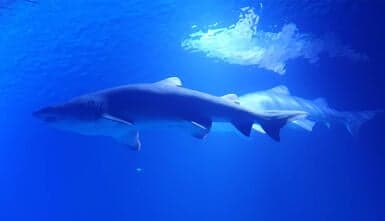
Are There Sharks In Spain? Here's What You Need To Know
Anyone who has ever seen Jaws might feel wary about the idea of sharks in the sea. The reality is that you're far more likely to be hit by a bus than attacked by a shark. Still, there are sharks in Spain, and sightings have increased in recent years along the Costa del Sol, Costa Brava, Alicante, Ibiza and the Canary Islands. Shark attacks in Spain remain extremely rare, and most species are harmless.
In 2024 and 2025, several beaches were temporarily closed after sightings. For example, a 2-metre blue shark was seen in Menorca, a hammerhead appeared in Gran Canaria, and in Orihuela a shark swam close to shore. These closures are precautionary, and Spanish authorities act quickly to protect swimmers.
Why are there sharks in Spain?
Experts highlight three main reasons why sharks in Spain are becoming more visible. Climate change is warming seas and shifting migration routes: fish and other prey move northward to cooler waters, and sharks follow, bringing them closer to Spanish coasts where they were less common before. Overfishing also plays a role — when fish stocks decline, sharks venture nearer to shore in search of food, and as apex predators they are vital to maintaining balance in the marine ecosystem. Finally, food sources and currents matter: marine biologist Juan Carlos García explains that sharks may approach beaches to follow escaped fish from nearby farms, and unusual currents or illness can also push sharks closer to shore, sometimes causing erratic behaviour.
Where are sharks found in Spain?
Sharks live in both the Mediterranean and Atlantic waters of Spain. Common hotspots include the Costa del Sol, with occasional sightings near Málaga, Marbella and Granada; the Costa Brava, in Girona and Tarragona, where blue sharks forced beach closures in 2024; Alicante, which saw a minor bite incident at Arenales del Sol in 2016 and regular sightings near Tabarca; the Balearic Islands, with blue sharks in Menorca and hammerheads and small catsharks in Mallorca and Ibiza; the Canary Islands, with frequent hammerheads, makos, whale sharks and angelsharks; and Galicia and Cantabria, deeper Atlantic waters where basking sharks and rare great whites have been reported.
Which sharks live in Spanish waters?
There are over 50 shark species in Spain. The most commonly sighted are the blue shark (tintorera), the most frequent visitor to Spanish beaches; the hammerhead shark, seen offshore, especially in the Canaries; the shortfin mako (marrajo), fast and powerful but rarely near swimmers; the dogfish or catshark, small and harmless sharks common in the north; the basking shark, a harmless plankton-eater seen off Granada and Galicia; and the great white shark, extremely rare but occasionally reported off Galicia.
Are shark attacks common in Spain?
Shark attacks in Spain are very rare. Globally, only three species — great white, tiger and bull shark — are considered truly dangerous, and they are seldom found near Spain. Out of 1,200 shark species worldwide, fewer than 30 are known to have attacked humans.
In Spain, only two minor incidents have been confirmed in recent decades: Alicante (2016) and Ibiza (2017). Both involved blue sharks, with swimmers suffering small bites. No fatal shark attacks have ever been recorded in Spanish waters.
Why do sharks come close to beaches?
Although most sharks prefer deep waters, they may come near shore because of following prey schools or escaped fish from farms, migratory patterns and seasonal changes, unusual currents or storms, or illness or disorientation.
What should you do if you see a shark?
If you encounter a shark while swimming, stay calm and avoid sudden movements, swim slowly back to shore without panic, follow lifeguard instructions and warning flags, and report the sighting to authorities.
Encounters are rare and usually harmless. Authorities in Spain are quick to close beaches temporarily, ensuring safety for locals and tourists alike.
Conclusion: is it safe to swim in Spain?
Yes — Spain is one of the safest countries in Europe for swimming. Shark sightings are real but extremely rare, and attacks are almost unheard of. With clear waters, efficient lifeguards and safe beaches, Spain remains a top destination for summer holidays.
If you dream of living by the sea, from Costa del Sol to Costa Brava, our team at Right Casa can help you find the perfect property. Contact us today and start your new life by the beach.
Have questions about property on the Costa del Sol? We're happy to help.
Get in Touch